

A joint venture with Vancouver-based dentist Dr. Scott Yamaoka and Ex-Dyson design engineer Zachery Yamaoka with the mission to produce best-in-class user-driven face shields that work seamlessly with the dental workflow and equipment like the dental loupes and light. Ambience is the face shield of choice with the Canadian dental hygienist association and over half of the dental schools in Canada. With hundreds of testimonials from dental professionals and been voted best product of the year by 4 of the largest dental product publications in north America.

Co-founder, Engineering
Co-founder, Product & Design
I would like to first address the reason I'm not featured in the marketing materials even though I am the head of design and second-largest shareholder of the company. In a nutshell, this was a personal decision as my presence would muddy the marketing story of a dentist-designed face shield. The notion that this face shield was "designed by a dentist for dentists" was found to greatly impact our conversions. Although, since the very beginning the design and production process was lead by me, which can be verified simply by scrolling down to the team section at our official website's about page (now through web archive since I've exited the company to fully dedicate myself to my other projects).


User-Driven Iterative Design Process


Over a period of 5 months, I led a detailed effort of user-driven iterative design with 12 dentists and their supporting practitioners. We made several customized prototypes for the needs of each dentist and had them test run them a month at a time. We interviewed them weekly and would send them an improved prototype each month based on their discoveries: this amounted to over 50 unique prototypes in the end. With the data collected, we discovered that there were 3 large categories of needs. Namely clarity, comfort, and convenience.
Comfort is largely governed by weight and pressure over time. To address this, we stripped away most of the materials on the rim and left just enough material to support the protective shield. This however created the problem of the lack of overhead protection to pass safety standards (splash protection test). To fix this, we extended the protective shield on top. This design change not only made the face shield significantly lighter but also reduced the buildup of heat and water vapor. Furthermore, it increased voice transmittance from within the shield and allowed dentists to communicate better with their team. Finally, we maximized the contact area of the head harness with the head to better spread out the pressure. The resulting face shield was almost unperceivable even after extended surgery sessions which could take up to 8 hours.
The convenience of the shield is mostly driven by the spacing and ease of reaching for the magnifying loupes. However, it is also affected by don-doffing, washing, and even the ability to easily leave the face shield sitting on a desk without flipping over and getting the shield dirty. To maximize convenience, we designed a slidable slit on the rim for adjustable front clearance for the loupes. We also added two concentric knobs on each side of the face shield where the rims are connected to the head harness. The outermost green knob can be rotated to easily flip up and down the shield to allow dentists to reach their magnifying loupes. The innermost black knobs on the other hand are used to adjust the friction for the flipping gesture, allowing the face shield to maintain position after being flipped up or down. The aforementioned design change in the previous paragraph also means that only the protective shield is ever in contact with contagions and is the only surface that needs to be cleaned. This shield can be cleaned as is or removed from the rim and cleaned on a flat surface.
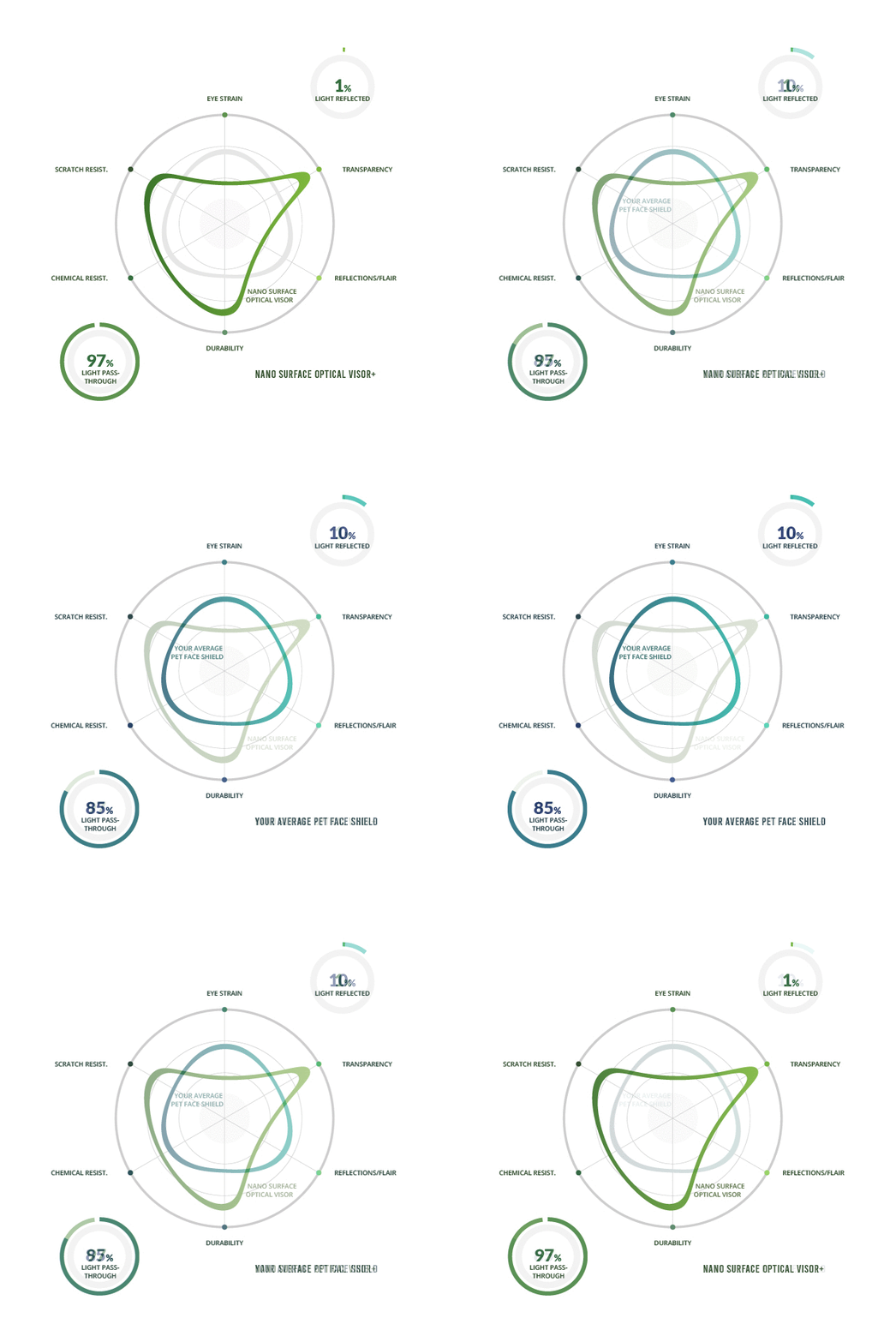
Finally, clarity is a physical property and can only be improved with material advances. We conducted extensive research on the internet and discovered a brand new technology first made mass manufacturable by a Taiwanese company in early 2021. The technology uses surface imperfections on the nanoscale to drastically reduce light reflectance (10x) and improve light transmittance (12%).
Testing
Splash protection testing was highly related to the form factor of the product and it was thus my responsibility to perform real-world tests according to government regulations prior to sending it off for third-party regulatory testing.


A custom head form was caded according to regulatory testing standards (BS/CA) with all markings directly engraved onto the model. A cardboard test jig was constructed according to the regulatory requirements using arts and crafts materials.


Testing was conducted on 9 orientations and 8 different shield installation positions. The smallest passable shield size with enough threshold for failure was determined.
DFM&A
I also led Ambience's manufacturing process, including DFM&A. Which is summarized below in image form.


Early Technical Drawings (blurred for IP reasons)

Wall thickness and warping analyses: The injection moulded parts were designed to have mostly uniform thickness all over. However, thicker areas have been adjusted with regards to the material shrinkage coefficient to slightly bulge out and counter shrinking even further. The end product has almost no visible shrinkage whatsoever.
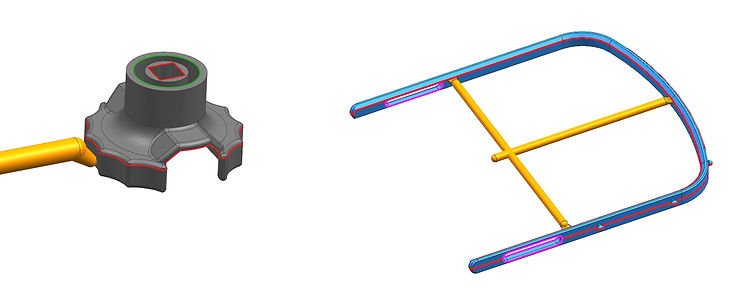
Parting lines: the injection moulded part was designed to have minimum parting lines and in a single direction so all parts can be made using a single mould. The parting line is designed to minimize aesthetic interruption and also feel good to the touch.

Draft analysis: draft angles are added on both sides of the parting line to improve electability. The large blue area on the front of the rim (bottom right image) was design this way as to not disturb the laser engraving of our logo and to direct attention away from the parting line since attention is drawn towards the logo.

Ejector design: Ejector pins were used on the circular spacer whilst ejector blades were used on the rim. This is to maximize push area whilst minimizing cost and effects on the aesthetics

Warpage negation: the warpage of the injection molded parts was predicted with the material properties and the CAD was adjusted to counteract them. A negative space verification jig was cast out of aluminum for long-term quality assurance.
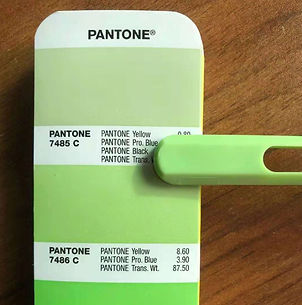


CMF: Finally, the CMF was determined and communicated with the help of a Pantone deck and a protolabs cube, the resulting plastic mixture was adjusted using a colorimeter.

Packaging Design and Manufacturing
I have also lead Ambience's branding as well as the design and manufacturing of the packaging and all accessories in the Ambience face shield line-up.






Tolerancing, material strength and CMF were formally specified using a statement of work and closely monitored during the manufacturing process.

Advanced surfacing techniques were used during the development process of the packaging insert to ensure mouldability and great product stabilizing effects.
Show Room Experience Design
Further led Ambience's show room design, check out the reaction on customer's faces!

Ambience Now
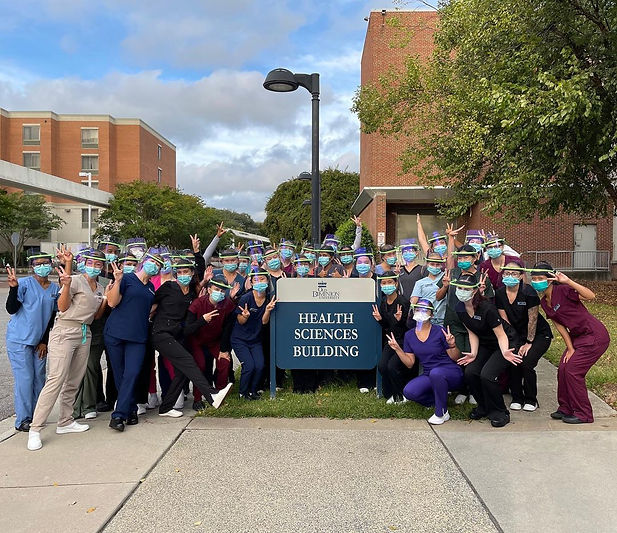
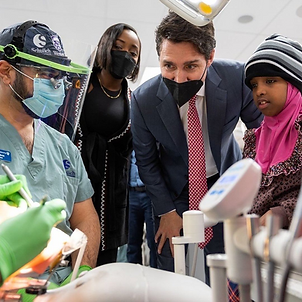
Ambience has since been voted best dental product of the year by 4 dental magazines, sold over 30k face shields, and is being used in over 50% of Canadian dental universities and institutions. Recently, Justin Trudeau visited Canada's National Dental Service and it's clear from it the popularity of Ambience over other shields.
.jpg)

Still Curious?
Find out by visiting our website at: ambienceppe.com and feel free to contact me to learn more!